
Signs of Low Progesterone: Understanding Your Hormonal Health and Fertility


Progesterone is far more than just a pregnancy hormone; it's your body's natural "chill pill" that keeps estrogen's growth signals in check. When levels drop, you might notice subtle but disruptive red flags like unexplained irritability, chronic fatigue, or irregular menstrual cycles. Recognizing the signs of low progesterone is the first step toward reclaiming your well-being and protecting your reproductive health. If you've struggled with staying pregnant or find yourself staring at the ceiling at 3:00 AM, your hormones could be the missing piece of the puzzle.
It's incredibly frustrating to feel "off" without a clear explanation for your mood swings or sleep issues. You deserve to understand what's happening inside your body and how to fix it. This article breaks down exactly how to spot hormonal imbalances and explains the latest updates, including the February 2026 FDA decision to remove certain boxed warnings from progesterone labels. You'll gain a clear checklist of symptoms for your next doctor's visit and discover actionable lifestyle steps to support healthy hormone production naturally.
Key Takeaways
- Learn how the corpus luteum produces progesterone to prepare the uterine lining for a successful pregnancy.
- Identify the specific emotional and physical signs of low progesterone that may be disrupting your monthly cycle and overall well-being.
- Understand why this hormone is essential for embryo implantation and preventing early pregnancy complications.
- Discover how chronic stress triggers cortisol production, which can actively deplete your body's progesterone stores.
- Find out how targeted nutrients like Vitamin B6, Magnesium, and Zinc provide the building blocks your body needs to restore balance.
What is Progesterone and Why Does It Matter?
Progesterone isn't just a chemical; it's a vital messenger that dictates the rhythm of your reproductive life. To understand What is Progesterone, we must look at its primary job: "pro-gestation." It arrives after ovulation to thicken the uterine lining, creating a nutrient-rich environment for a fertilized egg. Without enough of it, the uterus cannot maintain a pregnancy, leading to early losses or difficulty conceiving. Identifying the signs of low progesterone early can help you address these issues before they impact your long-term health.
Beyond fertility, this hormone acts as a natural neurosteroid. It calms the brain, supports deep sleep, and helps regulate your mood. It even plays a role in bone health by stimulating the cells that build new bone tissue. When you miss out on these benefits, the physical and emotional toll can be heavy. Recent medical shifts have also highlighted its safety; on February 12, 2026, the FDA updated labels for progesterone capsules like Prometrium to reflect a better understanding of its risks. To better understand how this hormone impacts your daily life, watch this helpful video:
The Delicate Balance: Progesterone vs. Estrogen
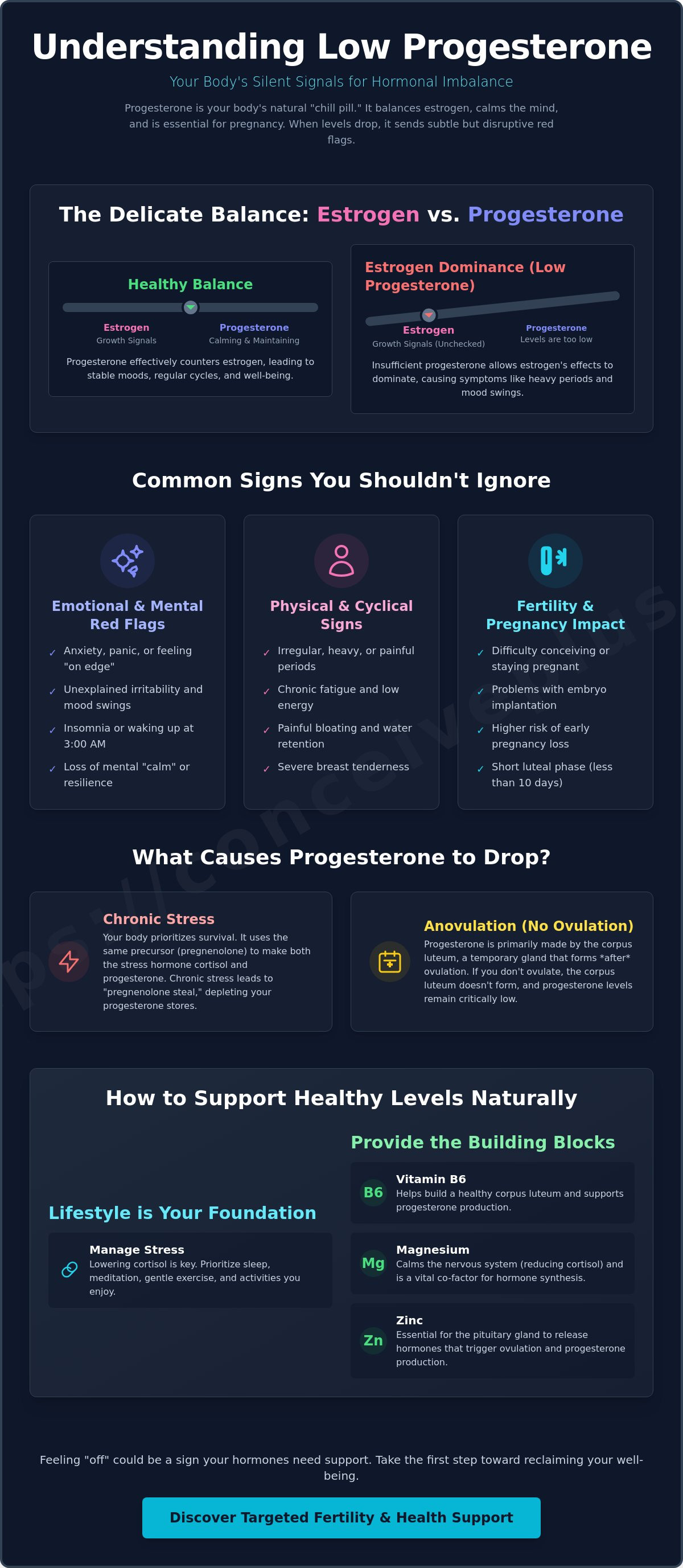
Hormones don't exist in a vacuum. They operate in a precise ratio, constantly checking and balancing one another. When your progesterone levels drop, you might experience a state known as estrogen dominance. This doesn't necessarily mean your body is producing excessive estrogen. Instead, it means you don't have enough progesterone to counter estrogen's growth-promoting signals. This imbalance is often the root cause of several signs of low progesterone, including heavy periods, painful bloating, and severe breast tenderness. By restoring this ratio, you can often alleviate the "wired but tired" feeling many women experience during the second half of their cycle.
The Corpus Luteum: The Source of Your Strength
Every month, your body performs a small biological miracle. After an egg is released, the empty follicle transforms into a temporary gland called the corpus luteum. This gland's sole purpose is to pump out progesterone for roughly 12 to 14 days. If you don't ovulate, a condition known as anovulation, the corpus luteum never forms. You can track your own cycle timing using an ovulation calculator to ensure your body is reaching this critical phase. The corpus luteum is essentially the engine of the second half of your cycle; its health and lifespan are absolutely necessary for maintaining an early pregnancy until the placenta takes over.
Common Signs of Low Progesterone You Shouldn't Ignore
While every woman's hormonal profile is unique, the signs of low progesterone typically follow a predictable pattern. These symptoms usually peak during the luteal phase, which is the week to ten days before your period begins. During this window, progesterone should be at its highest to balance estrogen. If it falls short, you don't just feel "off"; your body enters a state of physiological stress. Understanding the Physiology of Progesterone helps explain why these symptoms feel so pervasive, as this hormone affects receptors in the brain, breasts, and uterus simultaneously.
In your peak reproductive years, these signs often signal a luteal phase defect or a lack of ovulation. However, as you move into perimenopause, the decline becomes more permanent. Cycles often become shorter, and the "buffer" that progesterone provides against stress begins to thin. Recognizing these clusters of symptoms early allows you to take proactive steps with targeted fertility and health support to restore your natural rhythm.
Emotional and Mental Red Flags
The most common mental signs of low progesterone involve a sudden loss of "calm." Progesterone breaks down into a metabolite called allopregnanolone, which acts on GABA receptors in the brain. GABA is your primary inhibitory neurotransmitter; it's the "brakes" for your nervous system. When progesterone is low, those brakes fail. This often results in:
- Anxiety and Panic: Feeling a sense of impending doom or heightened "fight or flight" responses without a clear trigger.
- Sleep Disruptions: Progesterone is thermogenic and mildly sedative. Low levels lead to light, fragmented sleep or difficulty falling asleep, often accompanied by night sweats.
- Irritability: Often described as "PMS on steroids," this is caused by the destabilizing effect that low progesterone has on serotonin levels.
Physical Symptoms and Body Changes
Physical changes often mirror the internal hormonal chaos. Because progesterone is a natural diuretic, its absence leads to significant fluid retention. This is why many women experience sudden bloating and weight gain around the midsection that doesn't seem to respond to diet or exercise. Other physical indicators include:
- Hormonal Headaches: Migraines that occur like clockwork right before your period are a classic red flag. They're often triggered by the steep drop in hormones when the corpus luteum fails early.
- Skin and Hair Issues: You might notice adult acne along the jawline or a loss of skin elasticity. Progesterone helps inhibit 5-alpha reductase, so low levels can lead to an increase in androgen activity, causing oily skin or thinning hair.
- Cycle Irregularities: Spotting before your period starts or having a cycle shorter than 24 days suggests your body isn't sustaining progesterone levels long enough to keep the uterine lining stable.
How Low Progesterone Impacts Fertility and Pregnancy
Progesterone is often called the "hormone of pregnancy" because its presence is non-negotiable for a successful conception. Once an egg is fertilized, it needs a stable, nutrient-dense environment to implant. This "sticking" process depends entirely on progesterone's ability to transform the uterine lining into a receptive home. If you notice early signs of low progesterone, it may indicate that your body isn't producing enough of this hormone to sustain that initial connection. Without a robust supply, the embryo cannot properly attach, making it difficult to achieve a positive pregnancy test.
Once implantation occurs, the hormone's role shifts to protection. It acts as a natural muscle relaxant, preventing the uterus from contracting and potentially rejecting the pregnancy. Low levels can leave the uterine muscles overactive, which is a significant factor in recurrent early pregnancy loss. To ensure your body has the raw materials needed for hormone production, many women turn to fertility support bundles that include essential vitamins and minerals. Understanding Low Progesterone Symptoms and Causes is vital for anyone trying to conceive, as it allows you to address deficiencies before they become a barrier.
The Luteal Phase Defect: A Hidden Barrier
The luteal phase is the second half of your menstrual cycle, beginning after ovulation and ending when your period starts. For a healthy pregnancy to take hold, this phase needs to last at least 10 days. If your phase is shorter, you may have a luteal phase defect. This is one of the most overlooked signs of low progesterone. When the corpus luteum fails too early, the lining begins to shed before an embryo has a chance to settle. You can identify this pattern by using an ovulation calculator to track the exact length of your cycle and the timing of your peak fertility window.
Spotting and Irregular Cycles
Breakthrough bleeding or spotting several days before your actual period is a classic indicator that your hormones are struggling. This happens because the progesterone levels aren't high enough to hold the uterine lining in place. Instead of a clean, decisive start to your period, the lining begins to disintegrate prematurely. This instability makes it challenging for the body to maintain the early stages of gestation. If you experience mid-cycle spotting or have cycles that vary significantly in length, it's a clear signal to investigate your hormonal balance further to support your fertility goals.
What Causes Progesterone Levels to Drop?
Progesterone levels don't fluctuate in a vacuum; they respond directly to your environment, age, and metabolic health. One of the most aggressive "progesterone killers" is chronic stress. When your body is stuck in a state of high alert, it focuses on immediate survival rather than reproduction. This shift often leads to the signs of low progesterone that disrupt your daily life. Beyond stress, conditions like Polycystic Ovary Syndrome (PCOS) can halt ovulation entirely. Since you only produce progesterone after an egg is released, any cycle without ovulation results in a hormonal void.
Weight and age also play pivotal roles. Excess body fat increases estrogen production, which can drown out the signals of your existing progesterone. This creates a state of relative deficiency even if your levels are technically within a normal range. Additionally, as you move into perimenopause, your ovaries naturally produce less progesterone as cycles become more irregular. Understanding these triggers is the first step toward reclaiming your health with effective fertility and hormone support.
The 'Pregnenolone Steal' Explained
Your body uses a shared precursor called pregnenolone to produce both progesterone and the stress hormone cortisol, but it will always prioritize survival by choosing cortisol first. This biological hierarchy means that when you're chronically stressed, your body literally diverts the raw materials intended for your reproductive health to fuel your "fight or flight" response. Over time, this "steal" leads to profound hormonal depletion. To protect your production, focus on these three strategies:
- Aim for seven to nine hours of consistent sleep to lower your baseline cortisol levels.
- Swap high-intensity interval training for gentle movement like walking or restorative yoga during the second half of your cycle.
- Use daily mindfulness or deep breathing exercises to signal to your brain that it's safe to prioritize reproduction.
When to Test Your Progesterone Levels
Testing for signs of low progesterone requires precise timing. Because this hormone is pulsatile and only rises after ovulation, a random blood test will often provide a misleading "normal" or "low" reading. For a 28-day cycle, the gold standard is to test on Day 21. If your cycle is longer or shorter, you should aim to test exactly seven days after ovulation. As of June 2026, the cost of a progesterone blood test typically ranges from $24 to $105, with providers like Quest offering tests for approximately $75.65 plus service fees.
You should consider a clinical test if you experience persistent spotting, cycles shorter than 24 days, or difficulty staying pregnant. A single data point isn't always enough, so tracking your symptoms alongside your test results provides the most complete picture for your doctor. By identifying these patterns early, you can take actionable steps to restore your hormonal foundation.
How to Support Healthy Progesterone Levels Naturally
Restoring balance doesn't always require immediate medical intervention. While prescription options exist, foundational lifestyle changes often provide the support your body needs to resume normal production. By focusing on the raw materials your endocrine system requires, you can often mitigate the signs of low progesterone before they escalate. Blood sugar stability is a critical part of this process. When your insulin levels spike and crash, it creates internal stress that signals your body to prioritize cortisol over reproductive hormones. To help bridge the gap during your health journey, you can explore special offers on supplements designed to provide these essential building blocks.
Nutrition and Micronutrients for Hormonal Health
Specific micronutrients act as catalysts for hormone synthesis. Vitamin B6, for example, is vital for the development of the corpus luteum, while Zinc helps the pituitary gland initiate the ovulation process. Magnesium plays a supporting role by regulating the body's stress response and improving insulin sensitivity. Interestingly, some small studies suggest that Vitamin C is one of the few nutrients that may naturally increase progesterone levels in women with a luteal phase defect. You should also prioritize healthy fats, such as Omega-3s found in fatty fish or flaxseeds, as these are the structural precursors for all steroid hormones. Conversely, it's wise to limit caffeine and alcohol during the luteal phase. These substances can interfere with hormone metabolism and exacerbate the anxiety or sleep issues often associated with signs of low progesterone.
Lifestyle Adjustments for Better Balance
Your daily habits determine how much energy your body can "spend" on hormone production. If you're constantly performing high-intensity workouts, your body might stay in a state of high cortisol, which can "steal" your progesterone precursors. Switching to low-intensity exercise like swimming or walking can lower this stress burden and support circulation to the pelvic organs. Sleep is equally non-negotiable. Aiming for at least eight hours of quality rest in a dark room allows your endocrine system to repair and reset. This consistent rest period helps maintain the delicate balance between your pituitary gland and your ovaries.
To start supporting your hormones today, follow this simple three-step plan:
- Audit your plate: Add one serving of healthy fats and a Vitamin C-rich food, like bell peppers or citrus, to every meal.
- Shift your movement: Replace one high-impact cardio session with a restorative session like yoga or a long walk in nature.
- Prioritize the wind-down: Turn off screens 60 minutes before bed to support natural melatonin production, which is closely linked to your hormonal health.
Take Charge of Your Hormonal Harmony
Understanding the signs of low progesterone is more than a diagnostic step; it's a way to reconnect with your body's unique rhythms. You've learned how the "pregnenolone steal" can divert resources during stressful times and why the length of your luteal phase is a critical indicator of reproductive health. By focusing on nutrient density and stress management, you can begin to restore the balance your endocrine system needs to thrive. Whether you're managing perimenopause or trying to conceive, identifying these red flags early allows you to make informed decisions about your care.
For those looking to support their journey with precision, it's helpful to choose solutions trusted by millions of couples since 2008. Our formulations are recommended by fertility clinics worldwide and are specifically created with essential ions for reproductive health. You can shop all fertility support products to balance your cycle and take a proactive step toward better hormonal wellness today. You don't have to navigate these changes alone. With the right information and targeted support, you can reclaim your energy and optimize your fertility for the future.
Frequently Asked Questions
Can I get pregnant if I have low progesterone?
You can get pregnant with low progesterone, but the risk of early pregnancy loss or implantation failure is significantly higher. Progesterone is essential for preparing the uterine lining to receive a fertilized egg. If levels are insufficient, the embryo may struggle to attach or the lining may shed too early. Identifying the signs of low progesterone before trying to conceive allows you to address these issues with your healthcare provider to improve your chances of a healthy pregnancy.
What does low progesterone spotting look like?
Low progesterone spotting usually appears as light pink or brown discharge in the days leading up to your period. Unlike the start of a normal menstrual bleed, this spotting is often intermittent and doesn't transition into a heavy flow right away. It happens because the uterine lining is unstable due to a lack of hormonal support. Tracking these patterns can help you distinguish between a healthy cycle and a potential hormonal imbalance that needs attention.
How quickly can I increase my progesterone levels naturally?
You should expect to see natural improvements in your hormone levels within approximately three months. Because the development of an egg takes about 90 days, lifestyle changes like improved nutrition and stress management need time to influence a full cycle. Consistency is key when using vitamins like B6 or Magnesium. Most women notice a reduction in the physical signs of low progesterone after two or three consistent menstrual cycles of targeted support.
Does stress really cause low progesterone?
Chronic stress is a primary driver of hormonal imbalance because your body prioritizes survival over reproduction. When you're stressed, your adrenal glands produce cortisol using the same raw materials needed for progesterone. This biological hierarchy means your reproductive system often loses out during periods of high tension. Managing your perceived stress is one of the most effective ways to protect your natural hormone production and restore your cycle's regular rhythm.
Can low progesterone cause weight gain around the stomach?
Yes, low progesterone frequently contributes to weight gain and bloating around the midsection. Without enough progesterone to balance estrogen, the body often stores more fat in the abdominal area. Additionally, progesterone acts as a natural diuretic. When levels are low, your body retains more water and salt. This leads to the persistent feeling of puffiness and bloating that many women experience in the week before their period starts.
Is low progesterone the same as menopause?
Low progesterone is a symptom, while menopause is a specific life stage. While levels naturally decline during perimenopause and reach their lowest point in menopause, younger women can also experience low levels due to stress or anovulation. Menopause is officially diagnosed only after twelve consecutive months without a period. You can have low progesterone and still be in your peak reproductive years if your body isn't ovulating consistently each month.
Can I test my progesterone levels at home?
You can use home testing kits to monitor your levels, though they work differently than clinical blood tests. Most home kits measure PdG, which is a metabolite of progesterone found in urine. These are helpful for confirming that ovulation has occurred during your cycle. However, for a precise numerical value, a blood test taken seven days after ovulation remains the clinical standard. Laboratory tests in 2026 typically range from $24 to $105 depending on the provider.
What foods are highest in progesterone-supporting nutrients?
While no food contains progesterone itself, certain nutrients provide the necessary building blocks for its production. Focus on pumpkin seeds and chickpeas for Zinc, which supports the pituitary gland. Walnuts and fatty fish provide the healthy fats necessary for hormone synthesis. Dark leafy greens are excellent sources of Magnesium, while citrus fruits and bell peppers provide Vitamin C. Some studies suggest Vitamin C is the only nutrient specifically linked to increasing progesterone levels naturally.


